The AI Knowledge Management Platform for a changing future
Traditional KM helps people find information. AI-ready knowledge management must also make that information understandable, trustworthy, governed, and actionable for machines. Shelf is best in class at both.
Talk to an Expert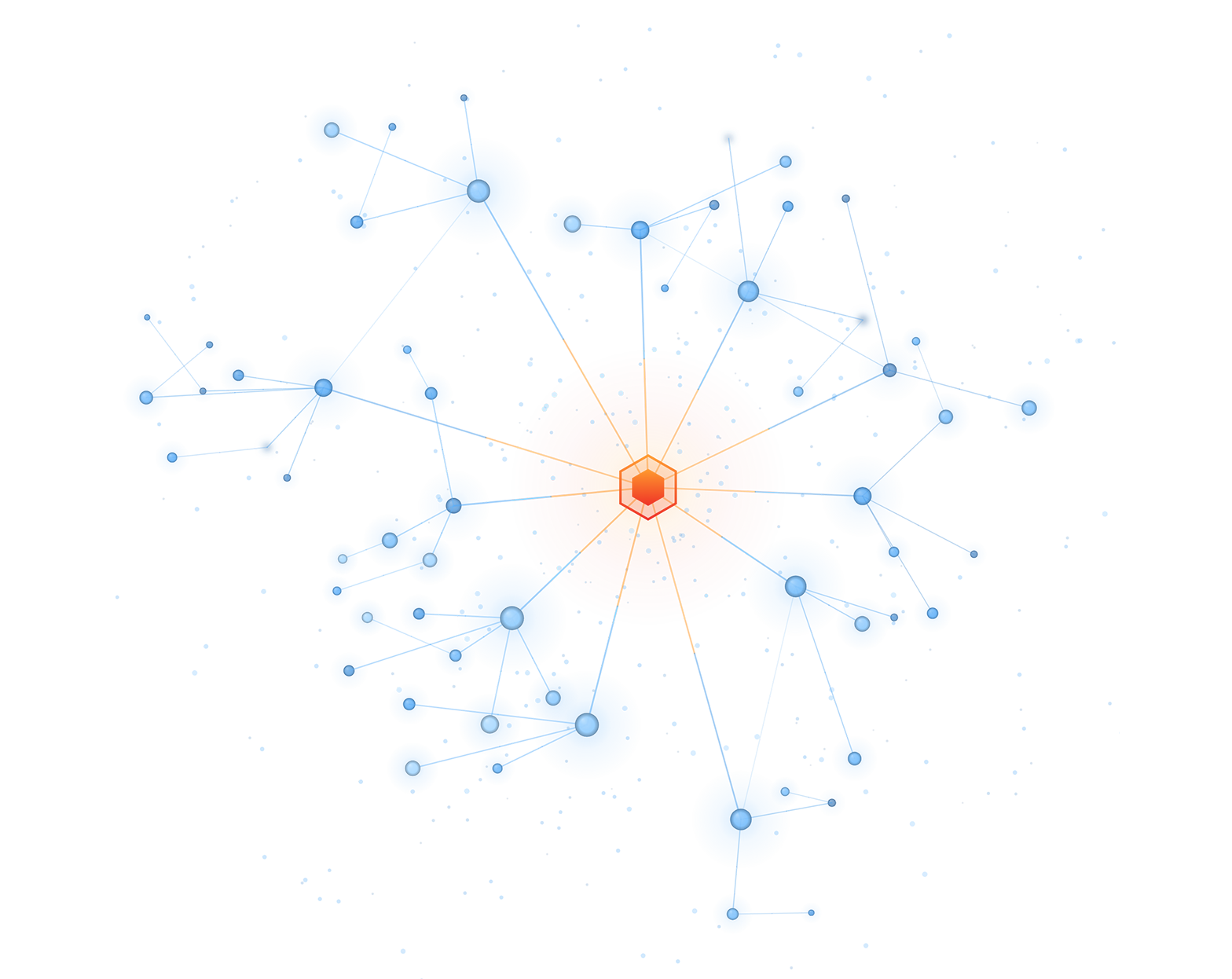






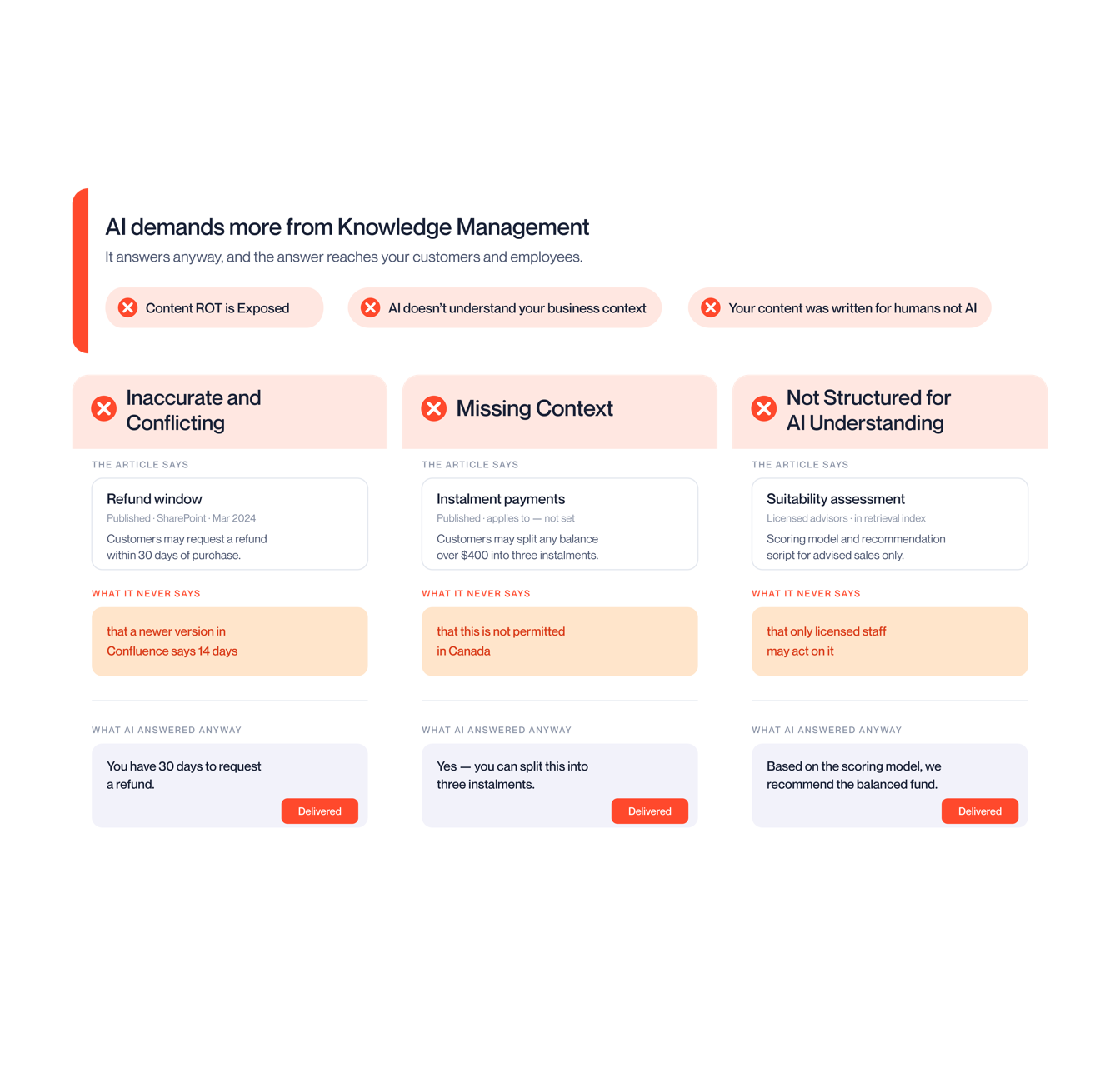
AI breaks legacy knowledge management
AI is only as reliable as the knowledge behind it. That makes enterprise knowledge the foundation beneath every AI investment—and gives knowledge management a bigger mandate than ever before. The challenge is that most KM teams are still working with systems that were never designed for what AI now requires.
Traditional knowledge management systems can store, publish, version, and search content. But AI needs more. It needs to know which of two conflicting articles is authoritative, whether a policy applies in one market but not another, and whether certain information should be excluded because of permissions or business rules.
People often understand that context instinctively. AI does not. Without the right structure, context, and governance, it may still produce an answer—and that answer can reach customers, employees, and downstream systems.
Closing that gap is the purpose of AI knowledge management. It is not something organizations can solve with a one-time cleanup or a series of patches. As knowledge changes, the system behind AI must continuously structure, contextualize, govern, and improve it so AI can use it accurately and reliably at scale.
58%
of service leaders are moving people into dedicated knowledge management roles, because AI depends on accurate, up-to-date content (Gartner)
71%
of AI projects will be abandoned because the knowledge and data underneath them was never made AI-ready (Gartner, through 2026)
80%
more accurate AI, at 60% lower cost is possible for organizations that give AI the business context it needs (Gartner, by 2027)
What makes knowledge AI-ready
AI-ready knowledge is enterprise content that has been cleaned, structured, contextualized, and governed so AI can use it accurately and reliably. It is the difference between content that may look usable to a person and knowledge that an AI system can consistently retrieve, interpret, and apply in the right situation. Making enterprise knowledge AI-ready requires four capabilities working together:

Remove Content ROT
Outdated, redundant, and conflicting content is continuously identified and resolved, so AI is not relying on information that is stale, inaccurate, or contradictory.

Structure Content for AI Consumption
Documents and other files are structured, enhanced, connected, and further enriched so AI can interpret them effectively.

Add Business Context
Knowledge is contextualized with the signals AI needs to understand what information means, when it applies, who it is intended for, and how it should be used.

Apply Governance and Controls
Permissions, ownership, approval status, publishing rules, and lifecycle policies remain attached to knowledge as it is used by AI. Ensuring AI only accesses appropriate, authorized, and current content.
Transform your existing content into governed, contextualized and AI-ready knowledge
There’s no need to migrate or rewrite your content. Shelf connects to knowledge wherever it lives and improves it.
It finds what’s broken. Outdated, duplicate, conflicting, and high-risk content is surfaced with clear explanations, then routed to the right people for review and remediation.
It adds the business context AI needs. Knowledge is enriched with the signals that help AI understand which information applies to a specific product, market, audience, or situation—so answers are contextually correct, not just generally correct.
It carries governance into AI. Permissions, policies, and business rules determine not only what people can access, but what AI is allowed to retrieve, use, and say.
At the foundation is Shelf’s AI Data Model, which connects your content, terminology, business context, and governance into a machine-readable knowledge layer. Your existing knowledge management processes stay in place, while Shelf adds the structure and context traditional systems were not designed to provide for AI.
Talk to an Expert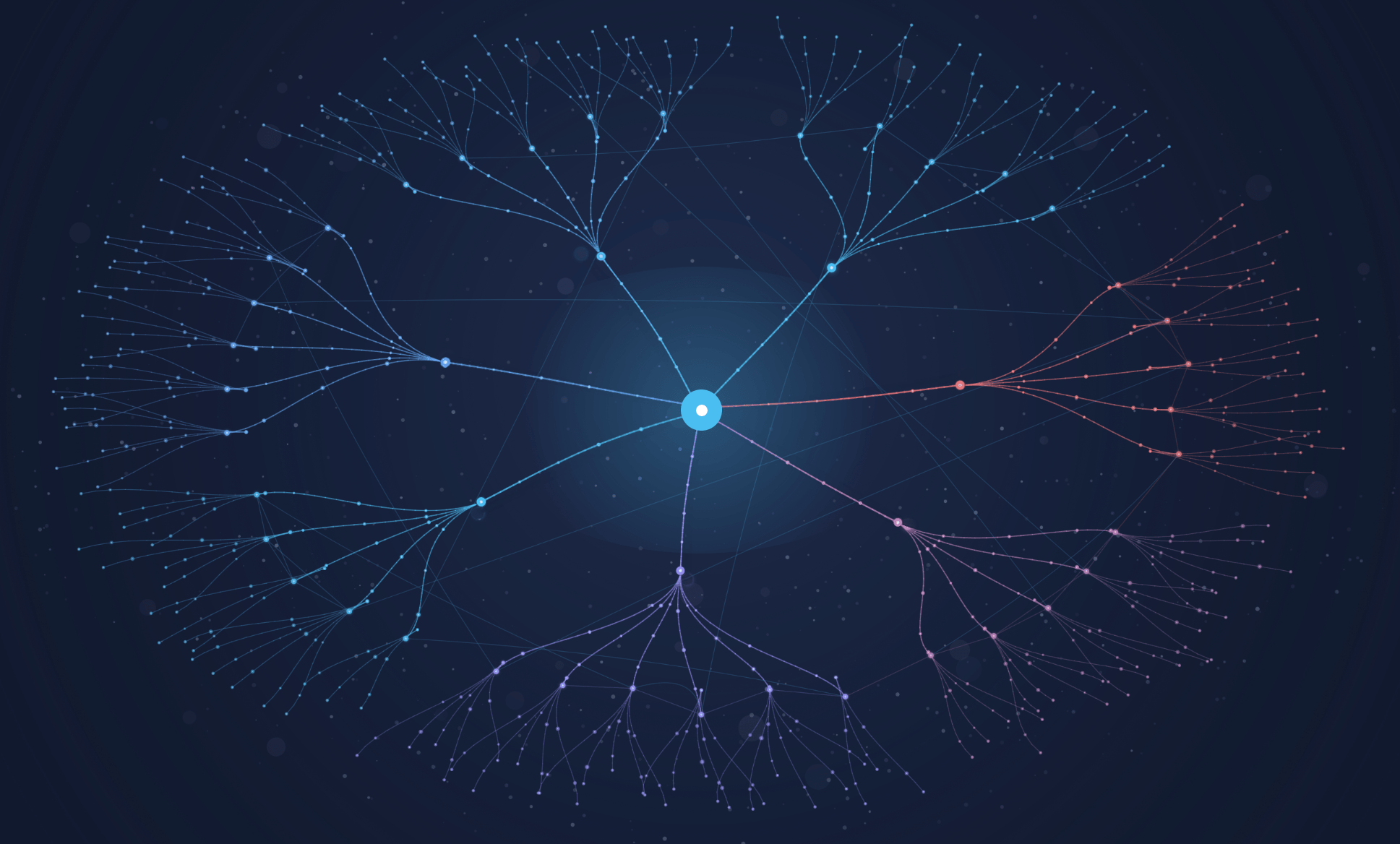
Shelf: A Leader in the 2026 Gartner® Magic Quadrant™ for Customer Service Knowledge Management Systems
AI is only as accurate as the knowledge behind it. As customer service is rebuilt around AI, that foundation is everything, especially in regulated industries where one wrong answer carries compliance and financial risk. Get the complimentary report to see why Shelf was named a Leader.

AI Knowledge Management built for the enterprise
Automatically make your content AI-ready
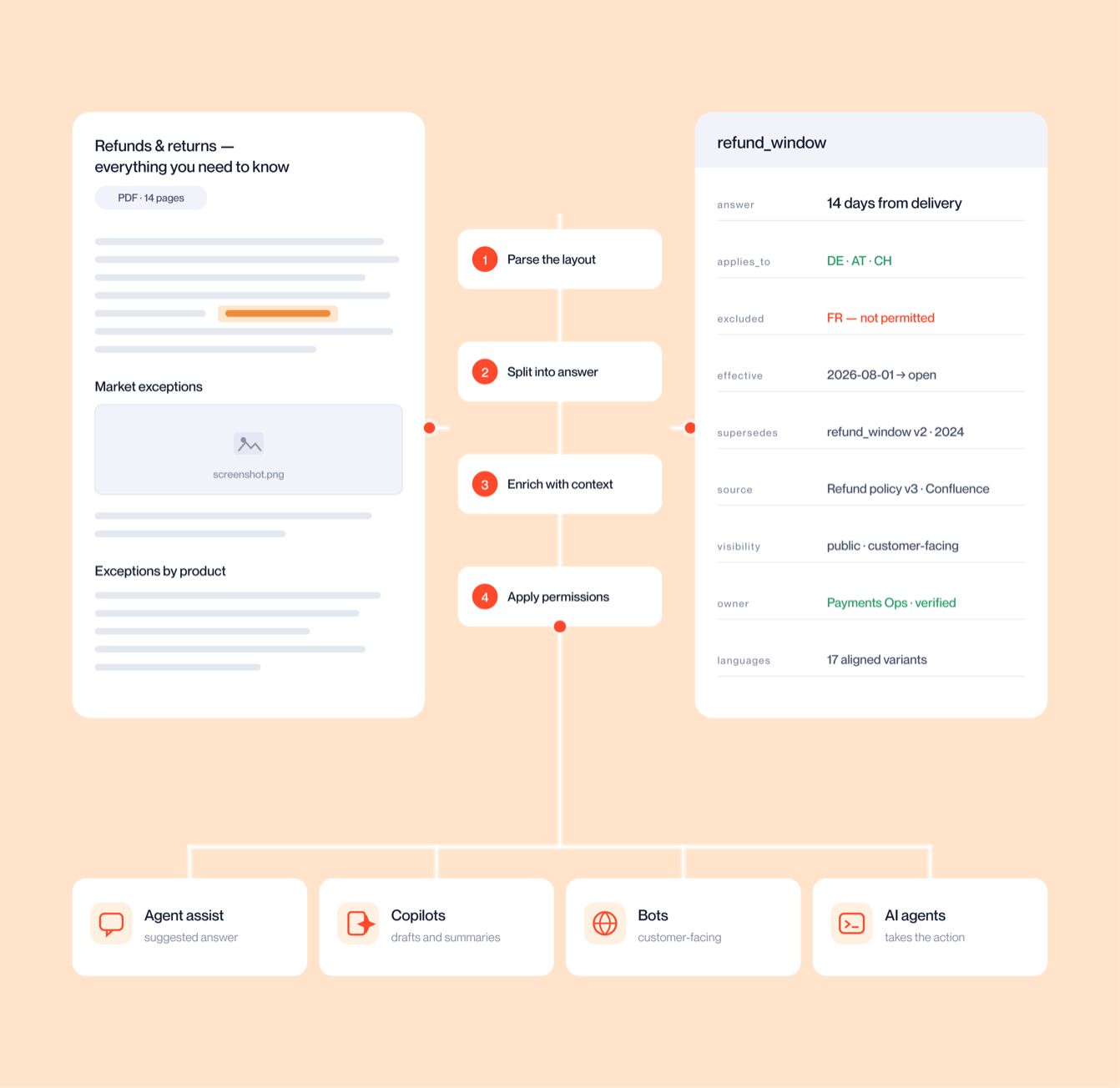
Your documents were written for people, not machines. Shelf automatically analyzes and enriches them with the business context AI needs, then structures that information for reliable machine consumption.
Your team does not need to rewrite content, and the version employees read remains unchanged. Knowledge teams gain a scalable way to ensure content is not just published, but continuously prepared and optimized for AI.
Always-on AI knowledge governance that eliminates content ROT
ROT, meaning redundant, obsolete, and trivial content, has plagued knowledge teams for decades. For AI, it is fatal. Shelf’s always-on governance continuously monitors your knowledge to proactively identify the harmful issues that cause both people and AI to lose trust in your content. Instead of waiting for an end user or an AI agent to surface a wrong answer, Shelf tells you exactly what content needs attention, why, and when—in real time.

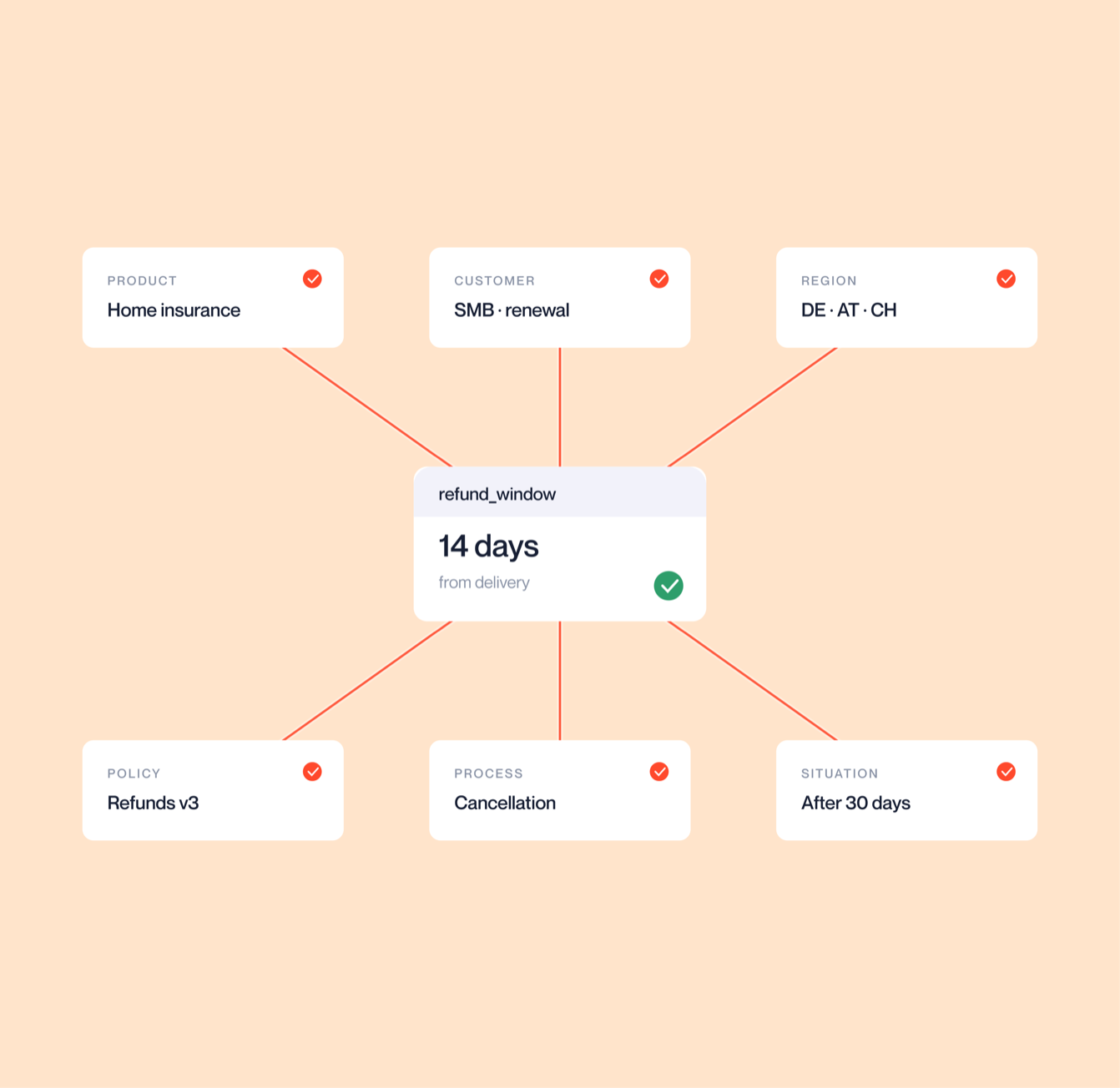
Give AI the context to understand your business
Your terminology, your products, your markets, and the relationships between them are modeled explicitly and kept current, with your experts in control of how AI interprets them. Answers come back right for the product, the market, and the person asking, instead of right in general.
Fix content sprawl that confuses AI
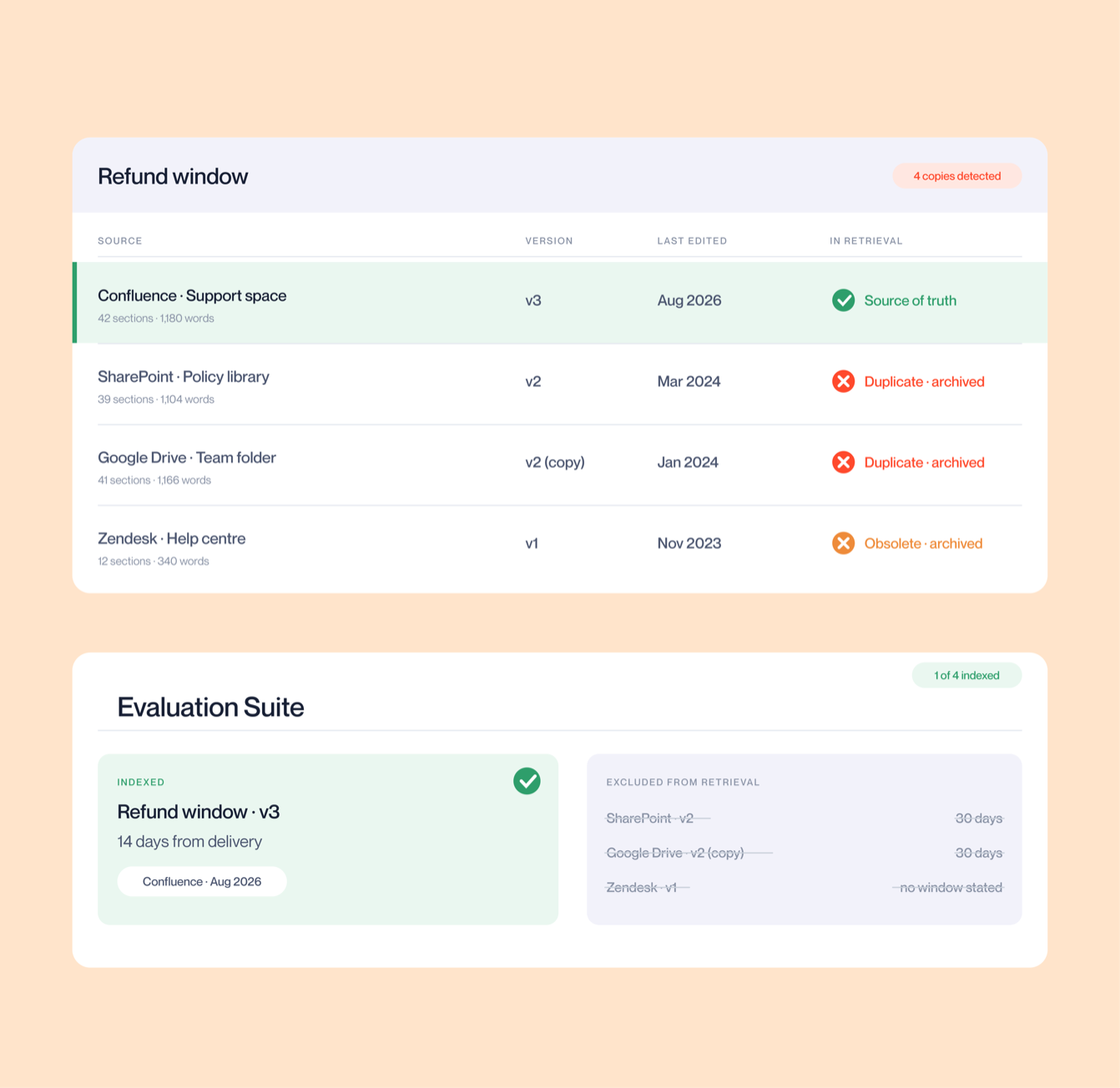
It is practically impossible to keep knowledge accurate when it is spread across different repositories. Shelf’s Content Connectors provide the transparency needed to eliminate duplicates and archive outdated content, without migrating a single document. For AI, this means a single, trusted source of knowledge rather than scattered conflicting copies that produce inconsistent answers.
Enterprise search that is better than Google
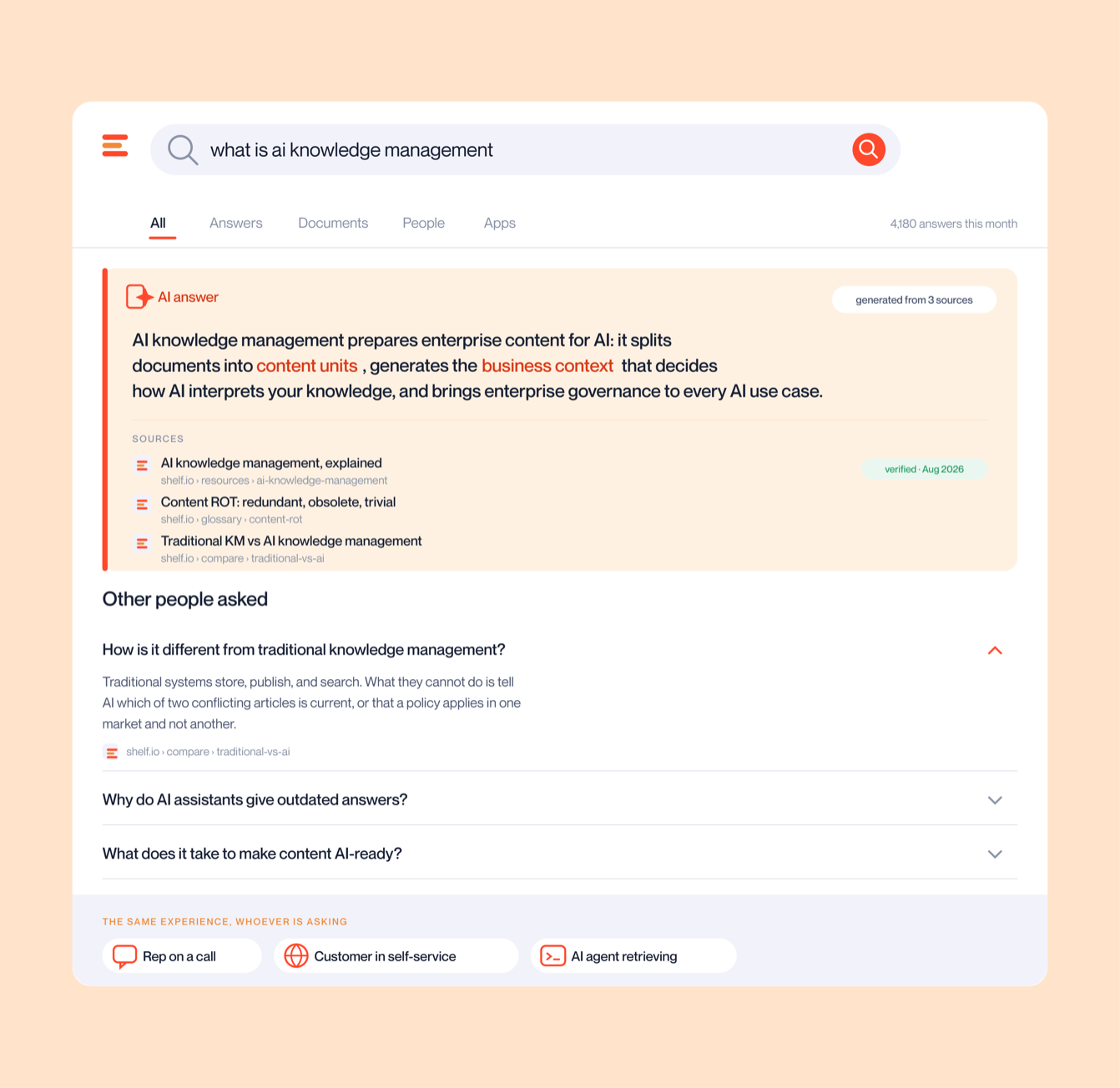
Your people should not have to know where an answer lives. With Shelf, they can ask questions in their own words and get a direct, trusted answer with the supporting source content alongside it.
The same knowledge experience can power a rep on a customer call, a customer using self-service, or an AI agent retrieving information in the background—so every experience is grounded in the same reliable source of truth.
Deliver trusted knowledge to humans and AI
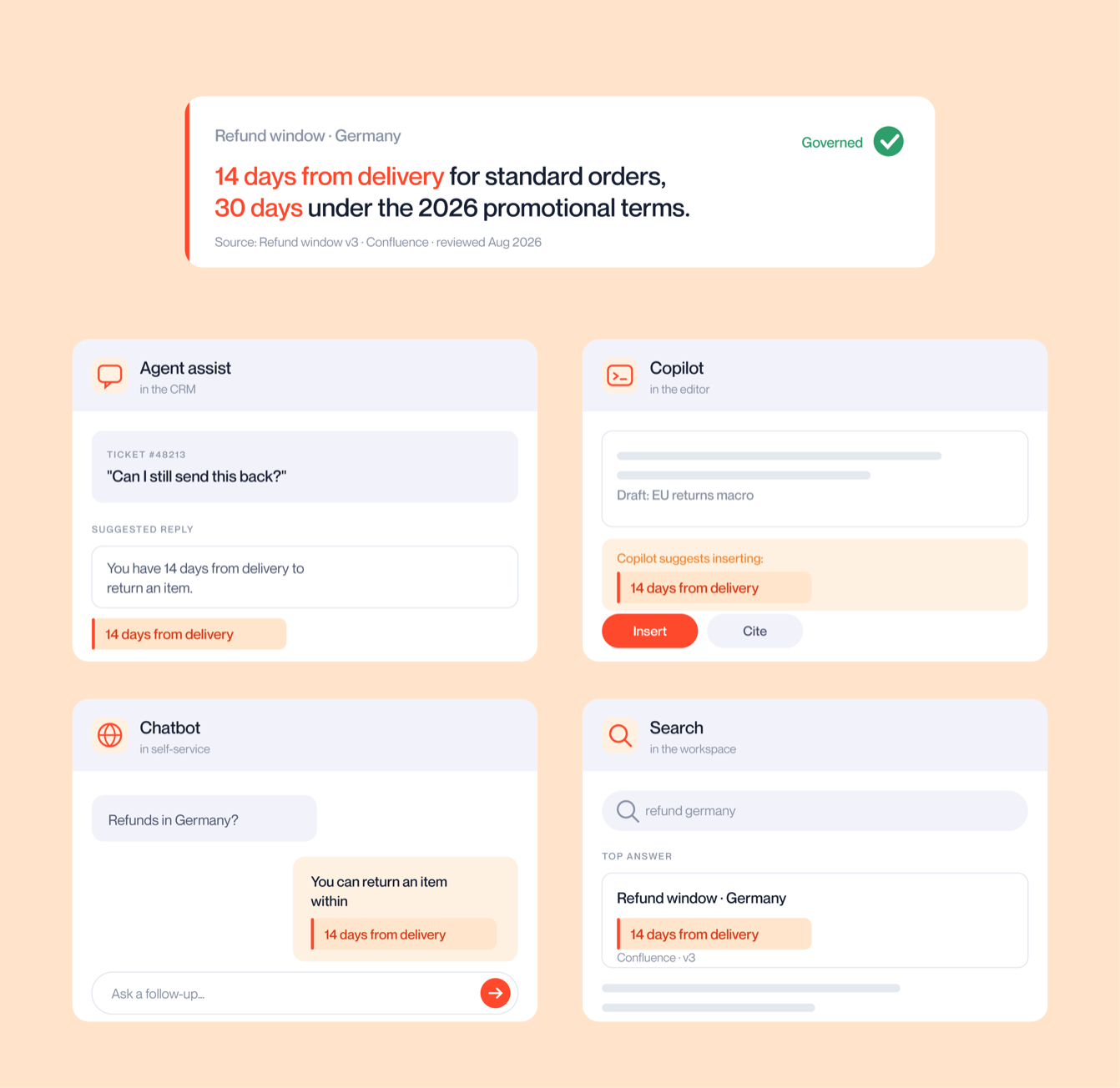
Whether you deliver knowledge through agent assist, a copilot, a chatbot, or a traditional search interface, Shelf eliminates the friction users face when trying to find the right information quickly. Because the underlying knowledge is governed and AI-ready, the answers your AI surfaces are answers your customers and employees can trust.
Measure knowledge performance with AI-ready analytics
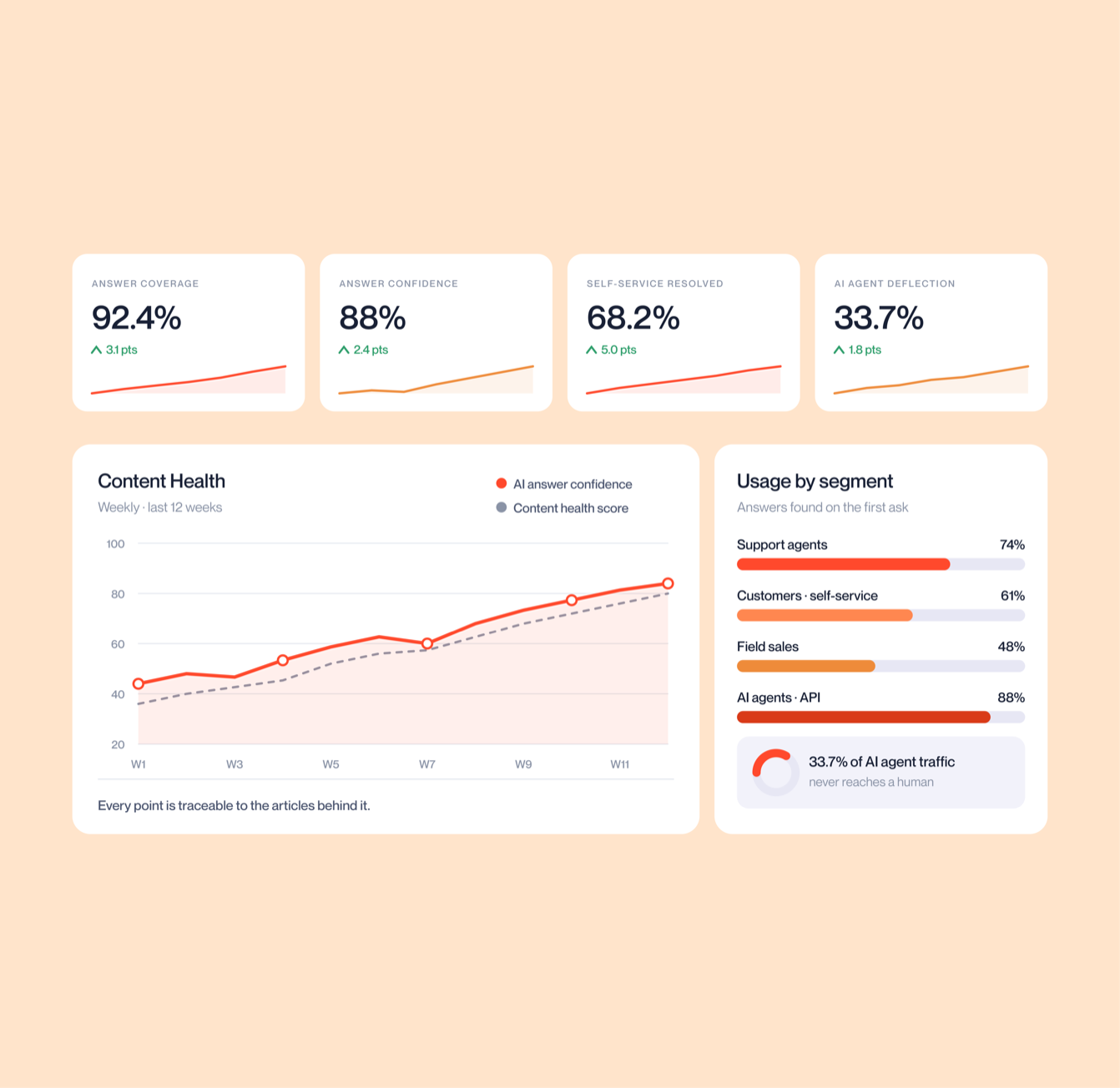
Shelf’s analytics let knowledge managers gauge content efficacy and understand usage across different end-user segments. Create custom reports directly in the interface or export analytics to your data lake to reliably tie knowledge usage to business KPIs, including the performance of your AI agents and copilots.




What our customers say
about Shelf on G2

See how Shelf can make your
enterprise knowledge AI-ready
Talk to an Expert FAQ
What is AI knowledge management?
AI knowledge management is the practice of governing, cleaning, and structuring enterprise knowledge so that generative AI can use it accurately. Unlike traditional knowledge management, which is built for people to read, AI knowledge management ensures that the content feeding AI agents, copilots, and chatbots is accurate, de-duplicated, governed, and optimized for machine consumption.
How is an AI knowledge management platform different from a traditional knowledge base?
A traditional knowledge base is built for human readers, who can recognize and work around outdated or conflicting content. An AI knowledge management platform is built for AI, which cannot. It continuously governs and quality-assures content so generative AI does not inherit and amplify knowledge flaws into wrong answers.
Why does enterprise AI hallucinate, and how does knowledge management help?
AI usually hallucinates not because of the model, but because the knowledge it relies on is outdated, duplicated, or lacks appropriate business context. By governing, cleaning and contextualizing that knowledge at the source and keeping it AI-ready, an AI knowledge management platform removes a leading cause of inaccurate AI answers.
What is AI-ready knowledge?
AI-ready knowledge is enterprise content that has been made accurate, de-duplicated, governed, and enriched with the right business context so generative AI can consume it reliably. It is the foundation that lets AI agents and copilots produce answers an organization can trust.
Does Shelf require migrating our content?
No. Shelf connects to your existing content wherever it lives through Content Connectors, providing governance and transparency without requiring you to migrate documents if that is not the desired approach.
What content sources and tools does Shelf integrate with?
Shelf connects to the content sources enterprises already use through its Content Connectors, so knowledge stays in place rather than being migrated into a new system. This lets Shelf govern and prepare content wherever it lives and serve it to your AI agents, copilots, and bots from a single trusted layer. Confirm the current list of supported integrations with your Shelf contact, as the connector library is expanded regularly.
How does Shelf keep enterprise knowledge secure and compliant?
Shelf applies automated governance controls so that sensitive or restricted content is managed appropriately and never surfaced to an AI agent that should not access it. The platform also automatically flags content that could create a compliance risk for GenAI, which is one of the issues identified in Shelf’s analysis of enterprise files. For specific certifications and security details, see Shelf’s Trust Center.
How long does it take to get started with Shelf?
Because Shelf connects to your existing content without requiring migration, you can begin identifying and resolving knowledge quality issues quickly rather than waiting on a lengthy data move. The typical path is to connect your content, surface the issues that affect AI answer quality, and begin fixing them with guided workflows. Your Shelf team can walk through an implementation timeline for your specific environment.
Does Shelf replace our existing knowledge base or work alongside it?
Shelf can serve both purposes, meaning it can replace your existing knowledge base or work alongside it. Through Content Connectors it governs and prepares content across your existing repositories, so you can make your current knowledge AI-ready without ripping out and replacing the tools your teams rely on. For organizations consolidating onto a single platform, Shelf can also serve as the primary knowledge layer.
How does Shelf measure the impact on AI and knowledge performance?
Shelf’s analytics let knowledge managers gauge content effectiveness and usage across end-user segments, and tie knowledge usage to business KPIs, including the performance of AI agents and copilots. Customers have reported outcomes such as significant reductions in content ROT and improvements in first-contact resolution after making their knowledge AI-ready. Verify the specific metrics relevant to your use case with your Shelf team.